How dating apps alter our existence

I have been thinking a lot about how modern dating apps change the whole concept of dating and developing a relationship.

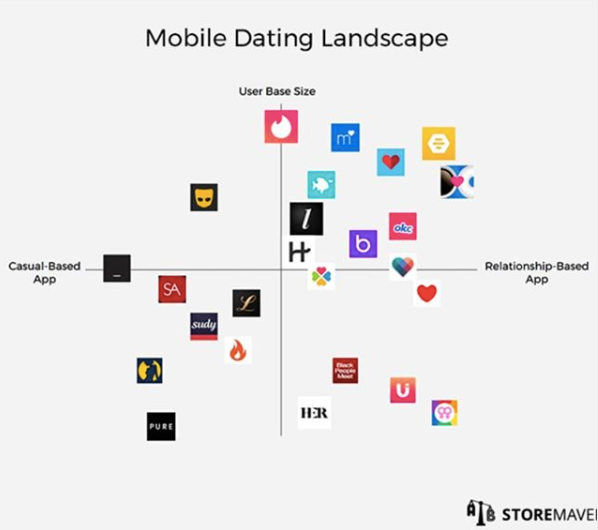
I don’t really represent a typical user, but if you hang out with the younger crowd (I’m guessing the primary target audience is somewhere in the late 20’s, early 30’s) you’ll discover that nowadays nearly everyone has at least one dating account (tinder, bumble, hinge, plenty of fish, list goes on).

This is a really interesting topic that is definitely due for a full-blown longitute sociological research (I wish I had more time on my hands).

Traditionally, a relationship used to be a natural result of an accidental social interaction.

Selection process was infrequent and limited. As generally, people have a limited number of face-to-face interactions. As a result, relationships are perceived as valuable once they are formed.

People meet, develop an attraction, then proceed to a closer and more committed relationship. The standard flow is: Emotional attraction -> Dating.

In the modern world, dating apps offer an ability to go through an extensive selection process using rational strategies for picking a potential candidate: 1) set filters according to your preferences 2) sort through thousands of people 3) filter further by asking “qualifying questions” after the actual conversation starts and then select a few lucky winners (multiple ones) because there’s another stage in the selection process – the face-to-face, which in many cases results in further disqualifications. The loop continues until a reasonable candidate is selected for further “trials”.

So, the natural (traditional) flow of building a relationship has now been altered. People meet for the purpose of developing a relationship. In many cases, dating comes before forming a bond with the other person. The flow is now: Rational filtering -> Dating -> Attraction (or lack of thereof).

What does it mean for us?

Relationships developed through these apps tend to be perceived as less valuable, they’re less committed, shorter and are often treated as temporary.

First of all, because they’re not built on the foundation of an actual emotional bond. They’re a result of a logical, rational selection process.

Second, lingering on the back of people’s minds is: if this one doesn’t work out – I can always sift through another 1000 within a week and pick a new candidate. Which results in less effort and commitment to actually make a relationship work.

Yes some of these “trials” lead to a happy ending. If you can call marriage that (since half the time it results in a divorce… but that’s a whole separate discussion).

But in general, I can bet the proceeds from my condo, success rate is pretty miserable.

However, I’m suspecting that if an emotional bond happens to be formed as a result – then there’s some potential for an increased chance of success vs the traditional approach, because it has an additional layer in the foundation – the rational filtering, which allows to eliminate some potential risks of failure.

Is this new way of dating – a positive change or not? Who knows. It’s just the reality of the modern world. A new phenomenon that we’re still getting used to.

Some would argue that it is more beneficial to have an increased chance of finding “Mr Right Now” than to be alone waiting your whole life for “Mr Right” to show up at your door with flowers…
Life is temporary

Everything is temporary. EVERYTHING.

Events, emotions, life itself.

We all know this. It’s a simple fact. But for some reason we treat those things above as if we weren’t aware of their temporary nature.

When we have negative feelings or emotions – we tend to get stuck and concentrate on them. As if this pain will stay with us forever. By doing this, we push ourselves deeper and deeper into the black hole. Some start seeing a therapist, others start taking pills, doing drugs or drinking. And the black hole expands. The pain gets worse because we make it worse.

Instead, why don’t we realize that there WILL be an end. We just need to be patient. Concentrate on other things and be patient, because tomorrow will be another day. And then there will be another one and another one, and the pain will eventually subside. And then it will go away completely. It always does. Always, regardless of the scope of the event that caused it. And the sooner we realize this, the quicker we recover.

A good friend once told me when I was going through tough times: “A year from now you won’t even remember what you’re worried about right now”. At that time, it seemed like the end of the world to me so I didn’t believe him. But he was right.

If you look back at your life a year ago, few years ago, you will remember those moments that caused pain. What you will also notice is that the pain did go away. If not yet – it will soon.

I follow this logic every time I run into tough situations. I do my best to resolve them.

And if there’s nothing else I can do and it still hurts – I move on to other things and just patiently wait. I don’t let the pain interfere with my life. I keep smiling and doing my thing. And eventually pain goes away. It always does.

If it comes back – it means there’s a trigger. You need to be strong enough to pull yourself out of situations that cause repetitive negative emotions. It’s not always easy because it normally causes change, and we’re naturally afraid of the unknown. But people who don’t change – don’t evolve.

Instead of getting stuck in negativism and watch days go by, we should live our life. Because life is also temporary.

Self-esteem

I’ve recently discovered that many psychological problems stem from low self-esteem (should’ve learned this earlier in life, but better late than never). The feeling of self-worth comes from true unconditional love for yourself, which is dependent on being able to be true to yourself, regardless of how other people perceive you.

Being true to yourself means to not do things that others expect you to do if that hurts you or contradicts your beliefs. It means to never lie to yourself.
Being true to yourself means accepting who you really are and not what others think you should be. It means to not pretend to be someone else in order to gain acceptance from others.
Instead, accept yourself.

That’s why what you think about yourself is way more important than what others think about you. This is not selfishness. This is self awareness. Which, in turn, benefits other people around you.

If you love YOU, you will be capable of truly loving others (not being addicted, not being dependent or possesive but truly loving, in a healthy way).

If you accept yourself and stop pretending to be someone else – you will attract people who admire you for who you are. And those who don’t accept you this way – are not required to stick around.

I am what I am. And I accept it.

Never give up

We had a race at the gym last week. 6 laps with exercises in between. About 1 mile total, awekward distance (not a sprint and not long distance so kind of hard to pick the right pace if you don’t do this often).

I remember running, somewhere around lap 3 or 4 and realizing that I started off too fast. I’m on the verge of exhaustion, heart rate is through the roof, I’m about to puke and/or faint. I realize: there’s absolutely no reason to push myself so hard, nothing will happen if I slow down, nobody will care if I finish last, I’m not an athlete, I’m a software nerd.

But I couldn’t make myself slow down. I just had to fight, I couldn’t give up. Apparently it’s in my veins. It’s hard to say at this point whether this is something I was born with or acquired during the 15 years of cross-country skiing. But it’s part of me, something I can’t control. I’ve learned to never give up.

Very often, we find ourselves in situations when it seems like this is it, you won’t make it, it’s hopeless, it’s not achievable. This breaking point is very important. It is the most critical moment of the entire process (whatever that may be: a race, a new project, new job, relationship, skill that you’re trying to master, or life itself…). This is the moment that defines the end result. This is when it’s most important to not give up – the moment you lose hope.

Don’t give up, fight and make it happen. Overcome your own weakness, because you can control what’s in your head. You’ll be surprised to see what you’re capable of.

I came in 3rd that day (out of 20 people, both men and women). I thought it wasn’t bad for a geek. I could hardly walk and had a pretty bad headache but I was happy. I pushed myself, I didn’t give up, and I surprised myself again.

…And I didn’t puke. That was definitely an achievement.

Smile

Everything that happened to me in the last year, made me realize a few things:
– life is too short to worry about what other people think about you; what’s much more important is what you think about yourself
– I’m not as fragile as I thought I was
– I can get out of any deepest shit and thrive
– when we say “I can’t handle this”, we’re lying to ourselves. We can, it’s all in our heads.

What doesn’t kill us – makes us stronger. Or, rather, it makes us become aware of our resilience. At the same time though, it tends to make us forget how to smile. Don’t let that happen. Get up, believe in yourself and smile. And you will get to the top of the world.

Тараканы

С тараканами своими знакома лично. Знаю поименно.

Вон тот в левом дальнем углу – это Вася, он ответственный за то, чтобы не верить в успех длительных романтических отношений.

Его друг Моня – страстный и любвеобильный, готовый бросаться на шею всем, кто обратит на него внимание и отдавать себя всего до капли, наплевав на собственную индивидуальность. Вася и Моня дружат, но очень часто ругаются. Иногда доходит до скандала и драмы. Тогда они напиваются, и снова дружат.

Ещё есть Кузьма. Он разгуливает по шкафу и раздает команды. Он всегда лучше всех знает, как кому жить и не признает чужого мнения. Ещё Кузьма совершенно не умеет извиняться. Моня его за это упрекает. Но негромко, чтобы не отхватить.

Нюра и Марина – две подруги, не разлей вода. Первая – самая красивая, умная и неотразимая, твердо убедившая себя в том, что мир (за пределами шкафа) должен валяться у ее ног. Вторая – жутко неуверенная в себе, ее самооценка напрямую зависит от общественного мнения. Нюра и Марина часто проводят время вместе, подолгу беседуя по вечерам за чашечкой чая. Много лет беседуют, но все никак не могут придти к консенсусу.

Фроня – самый весёлый из группы. Обожает откалывать язвительные шуточки, но при этом каким-то образом оставаться в рамках приличия, так что и не придерешься. Иногда Фроня язвит над одним из своих сотоварищей. Тогда остальные хором ржут. Да так увлеченно, что начинает гудеть в голове.

Недавно их отряд пополнился. С соседнего шкафа приполз Сережа (его оттуда выгнали, потому что места стало нехватать), чтобы рассказать про кризис среднего возраста. Мои – народ гостеприимный, сразу приютили Серёжу, хотя сразу заметили, что он немного того. Слушают теперь его сказки и радуются, что жить стало ещё веселее.

Internet and Social Media addiction

My thoughts as a newbie on Instagram

How have we become dependent on our phones, internet and social media in particular?

Why has this become an inseparable part of our lives?

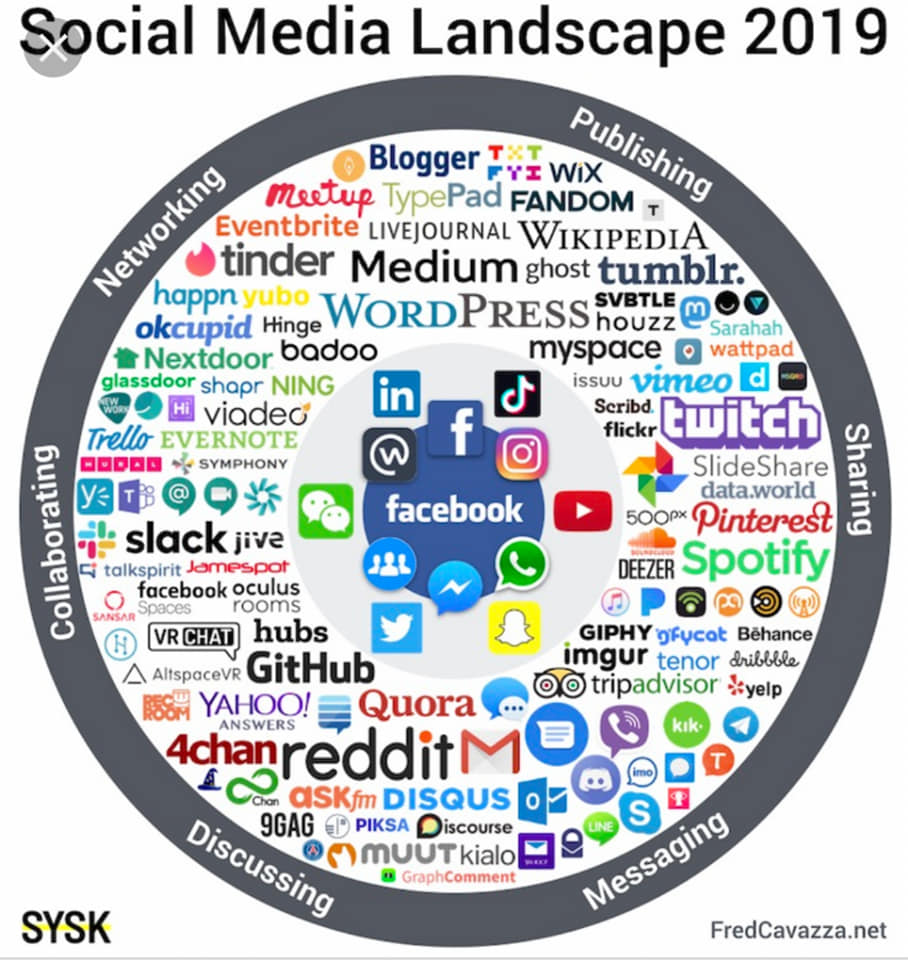
What’s the mystery behind Facebook and Instagram?

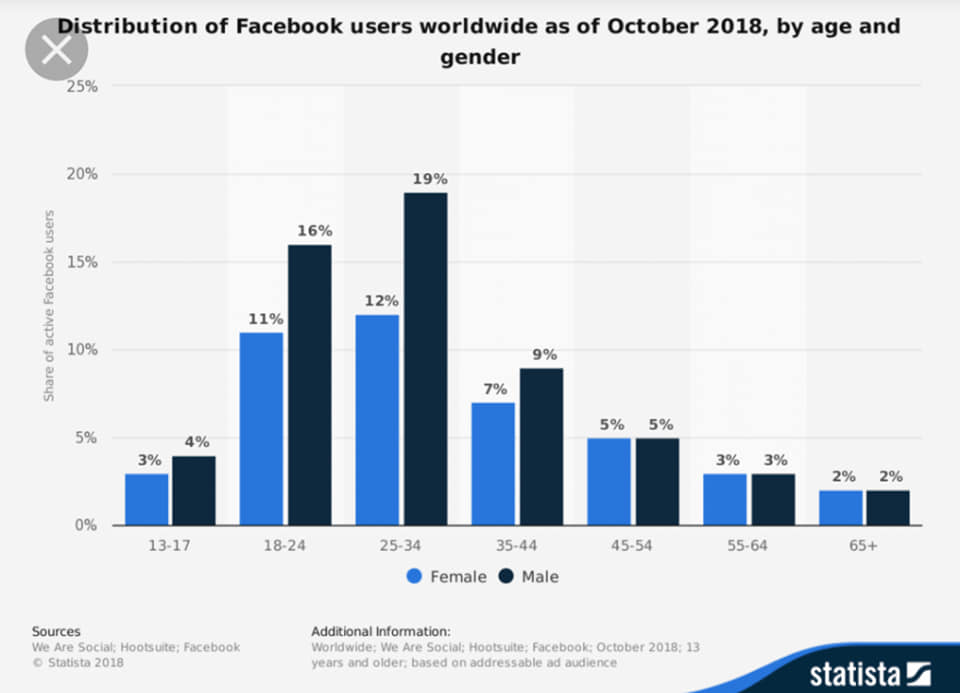
Facebook gets >2 Billion monthly active users. And nearly 70% of our country (the US) has a FB account.

(Kinsta, Jul 19, 2019: https://kinsta.com/blog/facebook-statistics/)

Here’s the logical chain of events as I see it:

1) first, the HYPE, it affects our decision to join (<=conformism, we want to be like everyone else, we don’t want to stand out, we want to be accepted by the society) ->

2) then, as we join and become active users, BOREDOM becomes the driving factor behind the amount of time we spend on SM.

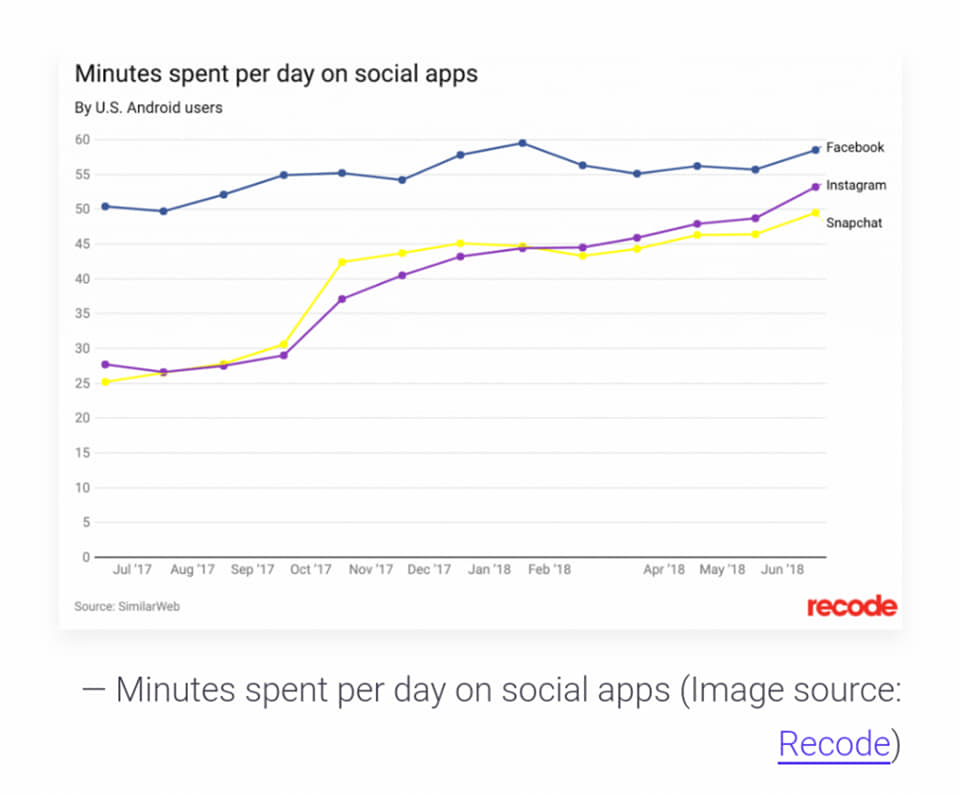
As of about a year ago, an average Android user would spend nearly an hour on FB, and equal amount on Insta and Snapchat. That’s total of almost 3 hours of SM time, which is somewhere between 15 and 20% of our waking hours! Add other platforms to these stats – and the picture becomes even more shocking.

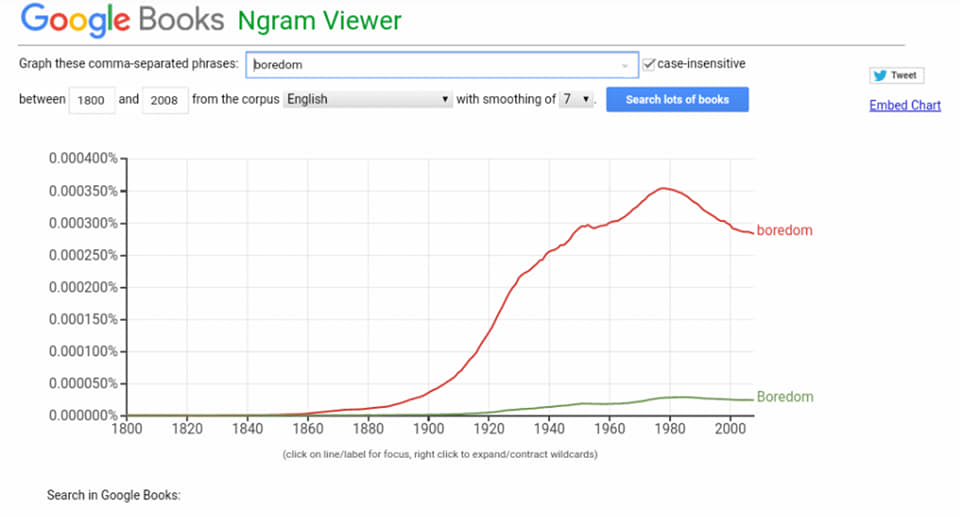
I discovered today that the word “boredom” became active in human vocabulary only in 1850’s and reached its peak in 1980 (see image attached).

Before mid 19th century people did not know that boredom was an issue that they had to deal with (which now seems almost impossible to comprehend). It was simply not a problem that needed to be addressed. Come 20th century – the awareness begins to rise, which triggers creativity, which triggers innovations (including technology), which seemed to have kept some of us entertained (according to the declining graph on the photo).

So far so good. However…

3) as we keep coming back to SM to kill time – we develop a habit, which then becomes an ADDICTION. This makes us return to it again and again, even when “killing time” is no longer the purpose. It becomes part of our lives. You get a new job, pop out 2 kids, you have zero free time on your hands – and yet, every few hours (minutes for some) your catch yourself reaching for your phone anxious to see how many people liked your recent post (where you look so friggin hot and of course you want the whole world to appreciate it), or what’s happening in the community because you absolutely have to know, in order to avoid that FOMO, or see if some inexperienced mother of a newborn baby absolutely needs your expert advice on what to offer as first solid food, because the baby won’t survive without your opinion being expressed (amen, you just saved a life and you feel good about yourself).

As with most data platforms: the flow of information is bi-directional. “Push and pull”. You have an ability to consume information but you also have the power to generate content. Both aspects are entertaining and addictive as each fulfills a different need: hunger for new information (or simply dealing with boredom) and desire to be heard, to be appreciated, to be meaningful.

Some of us view this dependency on Internet as an addiction, yet some consider it a pleasant, positive beneficial addition to our daily routine.

Which is it? The answer is (in my humblest opinion): you make it what you want it to be because you’re in control.

It absolutely can be positive and perhaps even enriching, assuming it doesn’t take away from other (more crucial and valuable) aspects of your life: your loved ones (real people surrounding you), your career, and finally – your mental health.

A good podcast related to this topic (and a book referenced in it):

Is Tech Making Us – Bored, Lonely, Angry, Stupid? From Telegraph to Twitter…

More interesting data from Kinsta: though the average Facebook user has 338 friends, they only consider 28% of their friends to be genuine or close friends. So, most of the time, we’re interacting with strangers. People you have never met and in most cases – never will. For some reason, those people become more important than your inner circle.

So…

Technology is good. Progress is good. But we have to realize that technologies have emotional and social implications, and keep control of our lives by balancing our pastime and keeping our values in the right order.

Agile

There’s a technique in agile software development called “Start, Stop, Continue”. It’s used in retrospective meetings that are held after a development iteration (Sprint).

There’s a lot to learn from it, for our daily life. Every human needs a “retrospective” every once in a while.

During the retrospective, one is forced to reflect on what happened in the “iteration” and identify actions for improvement going forward.

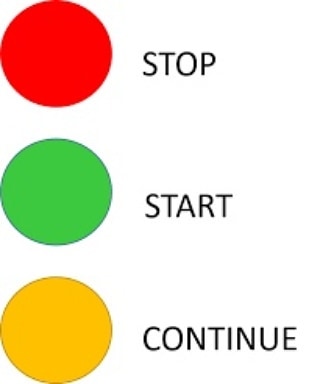
Start, Stop, Continue is an action-oriented technique. It makes you focus on creating a list of concrete actions by looking back at the last sprint (stop & continue) while also looking forward to the next sprint (start doing).

Learning from agile development, we need to run periodic retrospectives of ourselves and our lives, do a cleanup, reorganize and optimize. We need to look back, reassess our life and make decisions to:

Stop – what makes us unhappy and adds stress (commitments, routines, jobs, relationships);

Continue – what is truly important, what strengthens our integrity, what makes us better humans;

Start – new things that make us happier, more complete, that help us move forward and progress.

Some people implement this with the help of New Year’s resolutions. My Sprints, however, always tend to start and end in summer, which probably takes its roots from the school year pattern, which dictated the date my new life started (May 28, 2004 at Tom Bradley International Terminal) and set the tone for all future “sprints”.

People who travel a lot have an advantage of more frequent retrospectives. But most get buried in their daily routines, get stuck in commitments and responsibilities that are no longer enjoyable, adopting themselves to their lifestyle instead of trying to adopt and reorganize their lives. Reason being: as humans, we’re afraid of change, of the unknown. We’re also afraid of being judged.

In reality, however, most changes happen for the best and make us better and stronger.

Don’t be afraid of changes.

Judgement is bullshit.

Progress is life.

Общество механических часов

Мы живём в обществе механических часов.

Каждый из нас – болтик, винтик, гайка одного большого механизма, который все крутится, крутится, крутится…

И мы крутимся вместе с ним и куда-то бежим, без остановки и видимого конечного пункта назначения.

И у нас нет времени (или желания) остановиться и подумать: А туда ли мы вообще бежим? А зачем нам все это надо? А счастливы ли мы?

Получается, мы живём ради того, чтобы функционировать. А не ради чего-то большого и светлого. Получается, что сама функция – это и есть смысл жизни и самоцель.

Потому что как только мы останавливаемся и начинаем задаваться вопросами об этом самом смысле и о том, для чего все это нужно – вместо ответов мы получаем головную боль и депрессию.

А потом становимся обратно в свою шестерёнку (привычную, надёжную, ограниченную в пространстве, за которой не видно того, чего мы объяснить не можем) – и вроде бы все становится на свои места. Мы успокаиваемся и продолжаем выполнять свою маленькую функцию, веря в ее важность для всего механизма.

А те, кто в шестерёнку обратно влезть не захотел или не смог – таких начинают лечить и усиленно запихивать обратно. Ведь каждый должен выполнять свою функцию. Потому что мы все строим что-то большое и светлое. А что именно и для чего – ответить никто не может.